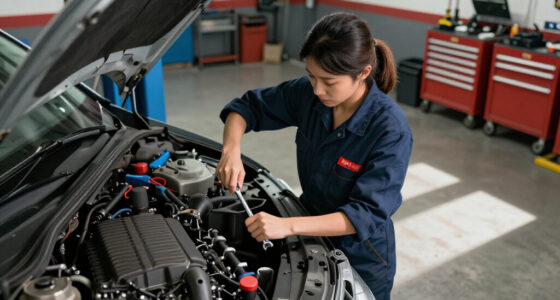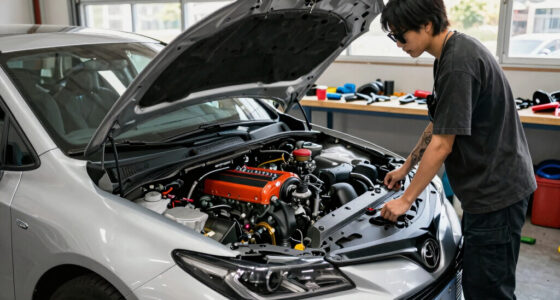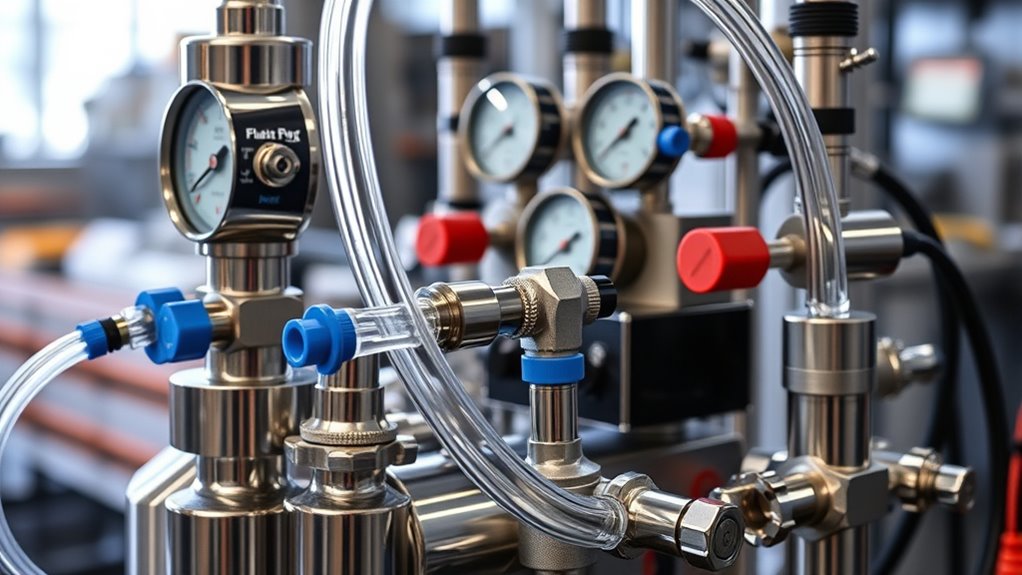

Fluid flushing machines work by circulating cleaning solutions or fresh oil through your system to remove old, contaminated fluids. You connect the machine with hoses or adapters, which bypass or drain the existing fluid, then activate it to push cleaner through passages, removing dirt, sludge, and debris. Sensors monitor pressure and flow to guarantee a thorough clean. If you want to understand how these systems maximize performance and efficiency, there’s more to explore.

Get business pricing on garage and car supplies
- Business-only prices and quantity discounts
- Tax-exempt purchasing
- Multiple users, one account, clear invoices
Key Takeaways
- Fluid flushing machines circulate cleaning solutions or new oil through systems to remove contaminants and degraded fluids efficiently.
- They connect to existing systems via hoses or adapters, bypassing or draining old fluids during operation.
- Sensors and gauges monitor pressure and flow, ensuring thorough cleaning and proper fluid replacement.
- The process includes circulating, flushing out old fluids, then switching to supply fresh fluids for optimal lubrication.
- They offer a faster, more thorough cleaning method compared to traditional draining and manual refilling.
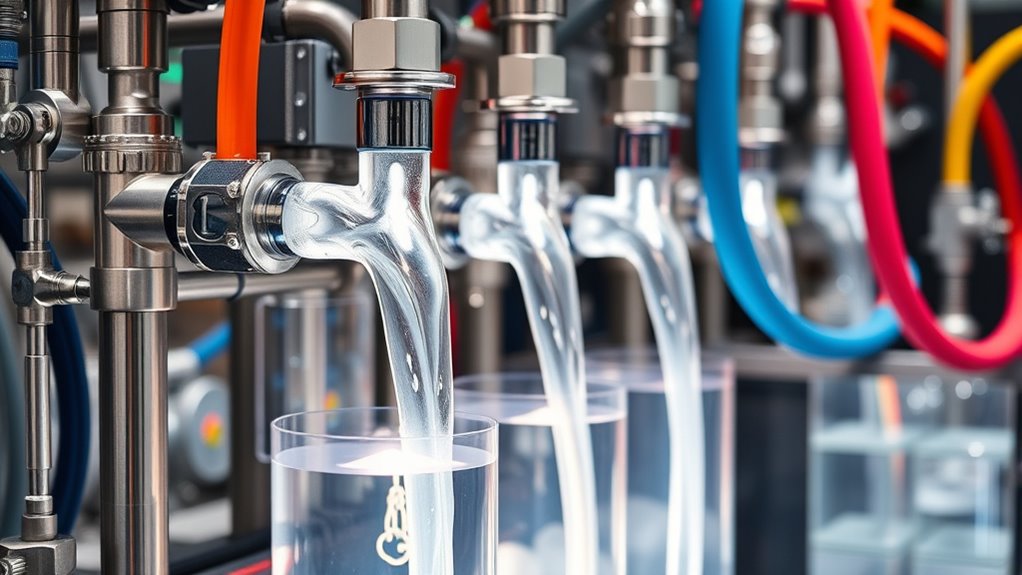
Have you ever wondered how to efficiently clean and maintain your vehicle’s or machinery’s fluid systems? Fluid flushing machines are the answer. These specialized devices are designed to remove old, contaminated fluids and replace them with fresh, clean liquids, guaranteeing peak performance and longevity. At the core of their operation lies a combination of advanced technology and straightforward processes that make maintenance procedures simpler and more effective.
When you use a fluid flushing machine for oil filtration, it works by circulating a cleaning solution or new oil through the system while extracting the old, degraded fluid. The machine typically connects to the system via hoses or adapters, allowing it to bypass or drain the existing fluid. As the machine runs, it pushes clean oil or a cleaning solvent through the old oil passages, effectively flushing out dirt, sludge, metal particles, and other contaminants. This process not only improves oil filtration but also restores proper lubrication, reducing wear on engine components or machinery parts. Using a fluid flushing machine regularly can significantly extend the lifespan of your equipment.
The maintenance procedures with these machines are designed to be efficient and thorough. First, you need to prepare your vehicle or equipment by ensuring it’s cooled down and that the fluid reservoirs are accessible. Once connected, the machine is activated, and the system begins circulating the cleaning solution or fresh fluid. Many fluid flushing machines come with sensors and gauges that monitor pressure and flow rates, allowing you to track the cleaning process in real time. Once the old fluid is cleared out, the machine switches to supply new fluid, completing the flushing process.
Throughout this process, you should pay close attention to the machine’s instructions and safety guidelines. Properly sealing connections prevents leaks, and monitoring pressure ensures the system isn’t under stress. Regularly performing these maintenance procedures with a fluid flushing machine helps prevent costly repairs, extends the life of your vehicle or machinery, and keeps everything running smoothly. Plus, it’s more efficient than traditional draining and refilling methods, saving you time and effort.
As an affiliate, we earn on qualifying purchases.
Frequently Asked Questions
What Safety Precautions Should Be Taken During Fluid Flushing?
When fluid flushing, you should wear personal protective equipment like gloves, goggles, and protective clothing to prevent contact with harmful fluids. Make sure to implement spill containment measures, such as drip trays and absorbent materials, to manage leaks effectively. Always follow safety guidelines, check equipment regularly, and guarantee proper ventilation. Staying cautious and prepared helps keep you safe from potential hazards during fluid flushing operations.
How Often Should a Fluid Flushing Machine Be Maintained?
You should follow a regular maintenance schedule for your fluid flushing machine to guarantee peak performance and extend its lifespan. Inspect filters, check for leaks, and replace worn parts every few months or after a set number of uses. Consistent maintenance keeps the machine reliable, prevents unexpected breakdowns, and maximizes its lifespan. Staying proactive with these tasks ensures you get the most out of your investment and maintain safe, efficient operation.
Can Fluid Flushing Machines Be Used on All Vehicle Types?
Yes, fluid flushing machines can be used on most vehicle types, thanks to their versatility. You should check the machine’s compatibility with your specific vehicle, as some models are designed for particular systems like transmissions or cooling. This machine versatility allows you to maintain different vehicles efficiently, but always verify the machine suits your vehicle’s requirements to avoid damage and guarantee peak performance.
What Are the Signs Indicating the Need for a Fluid Flush?
You’ll need a fluid flush if your vehicle shows signs like dirty or dark oil, overheating, or frequent coolant loss. If your oil change or coolant replacement seems overdue, it’s a good idea to have a professional check your fluid condition. These signs indicate that your fluids are contaminated or degraded, and a fluid flush can help restore proper engine performance and extend your vehicle’s lifespan.
Are There Environmentally Friendly Options for Fluid Disposal?
Think of eco-friendly disposal as giving your fluids a gentle farewell, ensuring they return to the earth peacefully. You can opt for biodegradable fluids that break down naturally, and seek out facilities that specialize in eco-friendly disposal methods. This way, you prevent environmental harm and keep your maintenance routine green and clean. Embracing these options transforms your fluid management into a responsible act of environmental stewardship.
Conclusion
Now that you understand how fluid flushing machines work, imagine them as gentle rainstorms washing away stubborn dirt and grime from your systems. They glide through like a invigorating breeze, clearing the way for smooth operation. With each flush, you’re nurturing your machinery’s health, much like a gardener tending to plants. Embrace this powerful tool, and let it be the cleansing wave that keeps your equipment running like a well-oiled machine, ready to face any challenge.
Columbus Day / Indigenous Peoples' Day Picks
long weekend sales
As an affiliate, we earn on qualifying purchases.