Regular fuel system cleaning is crucial for keeping your engine running smoothly and efficiently. Over time, dirt, carbon deposits, and other contaminants can clog fuel injectors and filters, leading to poor performance and higher emissions. Cleaning injectors restores proper spray patterns, while replacing filters ensures smooth fuel flow. Doing these maintenance tasks prevents costly repairs and boosts fuel economy. Keeping up with your fuel system maintenance is necessary, and you’ll discover more ways to protect your vehicle as you continue.
Key Takeaways
- Contaminants like dirt and carbon deposits build up over time, impairing fuel system performance.
- Fuel injectors can clog, causing poor spray patterns and reduced engine efficiency.
- Regular cleaning of fuel injectors restores proper spray and engine power.
- Replacing fuel filters prevents clogging, ensuring consistent fuel flow and engine smoothness.
- Maintaining the fuel system improves fuel economy, reduces emissions, and prevents costly repairs.

Over time, your vehicle’s fuel system can accumulate dirt, carbon deposits, and other contaminants that hinder performance. These build-ups can cause rough idling, reduced fuel efficiency, and difficulty starting your engine. That’s why regular fuel system cleaning is essential, especially focusing on fuel injector maintenance and fuel filter replacement. When you neglect these tasks, your engine has to work harder to deliver power, which increases fuel consumption and accelerates wear and tear on components.
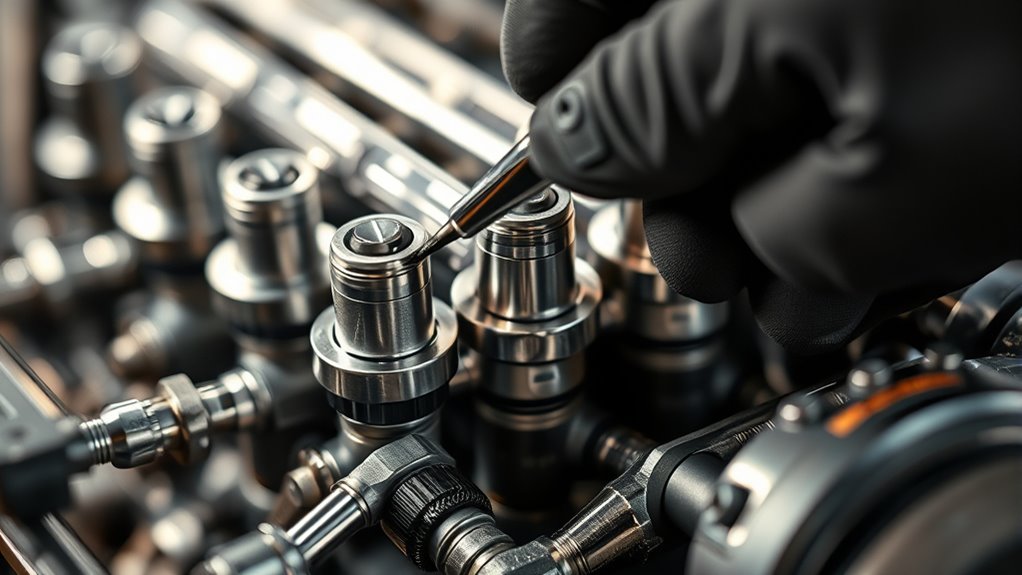
Fuel injectors are responsible for delivering precise amounts of fuel into your engine’s combustion chambers. Over time, they can become clogged or coated with deposits, disrupting the spray pattern and leading to incomplete combustion. This not only affects your vehicle’s power output but also causes emissions to rise and can even damage your engine in the long run. Regular fuel injector maintenance involves cleaning these injectors to guarantee they spray fuel evenly and efficiently. Using professional cleaning methods or fuel additives designed to dissolve deposits can restore proper function. In some cases, cleaning alone isn’t enough, and replacing severely clogged or damaged injectors might be necessary to maintain peak performance.
Another essential aspect of fuel system upkeep is fuel filter replacement. The fuel filter traps dirt, rust, and other particles from entering your engine, protecting sensitive components like the fuel injectors and fuel pump. Over time, the filter becomes clogged, restricting fuel flow and causing symptoms such as engine hesitation, poor acceleration, or stalling. Replacing the fuel filter at recommended intervals is a simple yet effective way to prevent these issues and keep your fuel system working smoothly. It’s a maintenance task that often gets overlooked but plays a key role in preserving your vehicle’s efficiency and longevity.
Combining fuel injector maintenance with timely fuel filter replacement ensures your fuel system remains clean and free of obstructions. When these components are in good condition, your engine runs more smoothly, consumes less fuel, and produces fewer emissions. Avoiding neglect not only saves you money on repairs down the line but also improves your driving experience. Additionally, using quality fuels and additives can help reduce deposits and keep your system cleaner longer. Making these maintenance practices part of your regular vehicle care routine helps you get the most out of your engine and guarantees reliable, efficient performance for miles to come.
Frequently Asked Questions
How Often Should I Schedule Fuel System Cleaning?
You should schedule fuel system cleaning every 30,000 miles or as recommended by your vehicle’s manufacturer. Regular cleaning helps maximize fuel additive benefits, improve engine performance, and prevent build-up. Keep an eye on your fuel efficiency and engine smoothness — if you notice issues, consider more frequent cleanings. Following cleaning frequency tips guarantees your fuel system stays clean, runs efficiently, and prolongs your vehicle’s lifespan.
Can I Perform Fuel System Cleaning Myself?
Think of your fuel system as the heart of your car’s performance. While you can attempt DIY tips, it’s best to use proper cleaning tools and follow detailed instructions. If you’re comfortable with basic maintenance, you can try cleaning the fuel injectors and filters yourself. However, for a thorough job, consider consulting a professional. Always prioritize safety and accuracy to keep your vehicle running smoothly.
What Are the Signs of a Clogged Fuel System?
If your vehicle struggles to accelerate, stalls, or experiences rough idling, you might have a clogged fuel system. Signs include poor fuel economy and engine misfires, often caused by fuel contamination or fuel injector issues. You may also notice difficulty starting your car or hesitation during acceleration. These problems indicate that debris or deposits are blocking fuel flow, and cleaning the system can restore your vehicle’s performance.
Does Fuel System Cleaning Improve Fuel Economy?
Yes, fuel system cleaning can boost your fuel efficiency and engine performance. You might notice your car running smoother, with better acceleration and less hesitation. Over time, deposits clogging the fuel injectors or filters hinder ideal combustion, wasting fuel. Cleaning your fuel system clears these blockages, helping your engine breathe easier. This improves fuel economy, saves you money, and keeps your vehicle running like new. Don’t wait—enhance your driving experience today.
Are There Any Risks Associated With Fuel System Cleaning?
Yes, there are some risks with fuel system cleaning, especially if you use incompatible additives or try DIY methods. You might damage sensitive components or cause clogging. To avoid this, make certain the cleaning products are compatible with your vehicle, and consider professional services for proper treatment. Professionals have the right tools and expertise to safely clean your fuel system without risking damage.
Conclusion
Now that you know the facts about fuel system cleaning, you might wonder what surprises lie ahead. Will your engine run smoother and last longer? The key is staying vigilant and proactive. Don’t wait until performance drops or issues arise—take action now. A simple cleaning could be the difference between a smooth ride and unexpected trouble. Are you ready to *release* the full potential of your vehicle? The choice is yours.