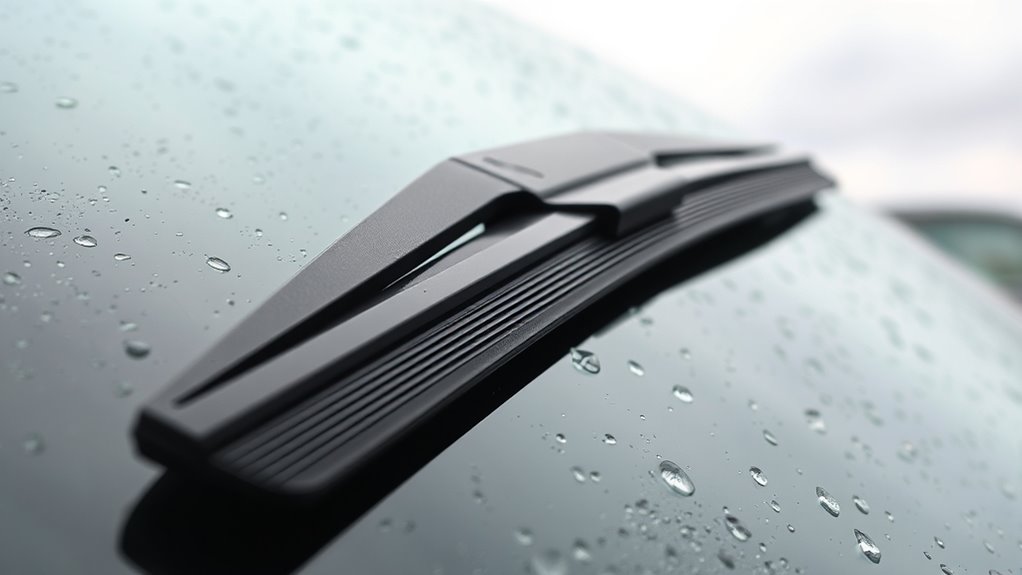

To select and care for your wiper blades, choose ones compatible with your vehicle and climate, opting for quality blades with flexible rubber edges. Regularly inspect them for cracks or stiffness, and clean both the blades and windshield often to prevent streaks. In winter, use insulated blades and low-temperature washer fluids to handle snow and ice effectively. Proper maintenance guarantees clear visibility and safety—and if you keep going, you’ll discover more tips to keep your wipers in top condition.
Key Takeaways
- Choose wiper blades compatible with your vehicle and climate for optimal performance.
- Regularly inspect blades for cracks, tears, or stiffness and replace as needed.
- Clean blades and windshield frequently to prevent streaks and scratching.
- Use winter-specific blades and low-temperature washer fluids in cold weather.
- Maintain rain sensors by keeping them free of dirt and grime for proper automatic wiper operation.
Your wiper blades play a crucial role in maintaining clear visibility during bad weather, but many drivers overlook their importance until they start streaking or squeaking. When the weather worsens, you rely on them to keep your windshield clean and your view unobstructed. Modern advancements like rain sensor technology have made this task easier. Rain sensors automatically detect moisture on your windshield and activate your wipers at the ideal speed, eliminating the need for manual adjustments. If your vehicle has this feature, it’s important to make sure the sensor is clean and functioning properly, as dirt or grime can interfere with its performance. Proper maintenance of rain sensor technology ensures you get the most out of your wipers during unexpected downpours. Maintaining the sensor is essential for optimal performance and safety.
Keep your rain sensors clean for optimal wiper performance during unexpected downpours.
As seasons change, so should your wiper blades. Winter wiper blades are specifically designed to handle cold temperatures, ice, and snow. Unlike standard blades, winter wipers are often made with reinforced rubber or have a protective coating that prevents freezing and cracking. They help clear ice and snow more effectively, reducing streaks and ensuring better visibility during winter storms. If you live in an area with harsh winter conditions, swapping to winter wiper blades before heavy snowfall hits can make a significant difference in your safety. These blades also tend to be more durable and resistant to the cracking and tearing that can occur with regular blades in freezing weather.
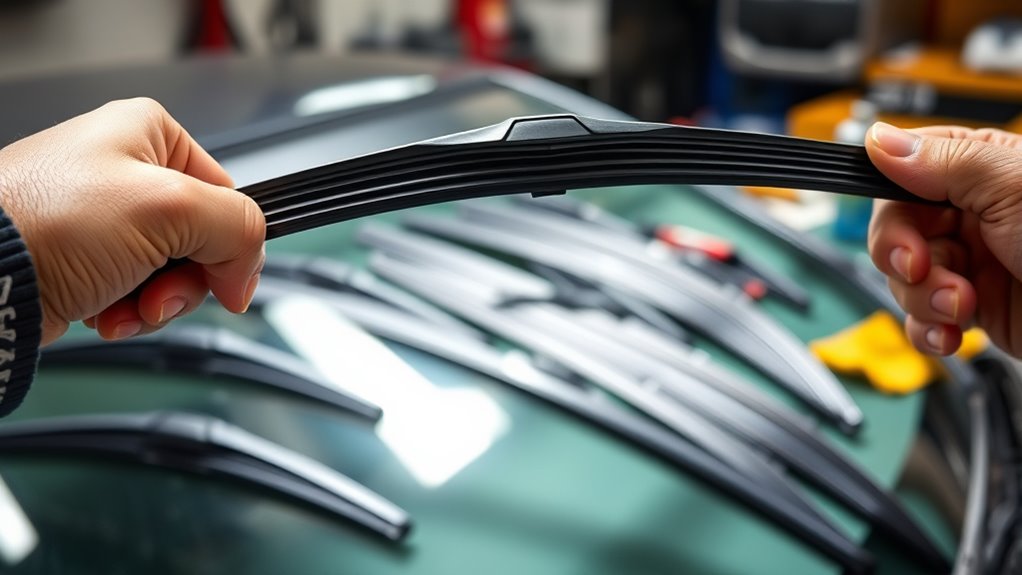
When choosing new wiper blades, consider the compatibility with your vehicle and the climate you drive in. Quality matters, especially in challenging weather. Look for blades with a sturdy frame and a flexible rubber edge that maintains contact with the windshield, even at high speeds or during heavy rain. Regularly inspect your blades for signs of wear, such as cracks, tears, or stiffness, and replace them as soon as you notice diminished performance. Clean your blades and windshield regularly to prevent debris from causing streaks or scratches. For added protection during winter, you might also consider using a windshield washer fluid formulated for low temperatures, which helps prevent freezing and keeps your wipers working smoothly.
Taking care of your wiper blades extends their lifespan and ensures they work effectively when you need them most. Whether you’re dealing with rain sensor technology or winter wiper blades, regular maintenance and timely replacement are key. Don’t wait until streaks or squeaking remind you to change them—stay ahead of the weather and keep your view crystal clear, no matter what Mother Nature throws your way.
Frequently Asked Questions
How Often Should I Replace My Windshield Wipers?
You should replace your windshield wipers every 6 to 12 months, depending on their lifespan and signs of wear. Regularly check for streaks, skipping, or squeaking, which indicate it’s time for new blades. Environmental factors like sun exposure and harsh weather can shorten their life. If you notice reduced visibility during rain, don’t delay—timely replacement guarantees clear, safe driving in all conditions.
Can I Use Regular Soap to Clean Wiper Blades?
Yes, you can use regular soap to clean wiper blades. For effective wiper blade cleaning, use a mild soap and water solution to remove dirt and grime. While soap vs. specialized cleaners both work, soap is a convenient option for routine maintenance. Just avoid harsh chemicals or abrasive scrubbers that could damage the rubber. Regular cleaning helps maintain clear visibility and prolongs the life of your wiper blades.
Are There Specific Wipers for Different Weather Conditions?
Think of wiper blades like clothing—they’re designed for different weather conditions. Yes, there are weather-specific wipers made for rain, snow, or ice, ensuring ideal visibility. Seasonal wiper options help you adapt as the weather changes, providing better performance and durability. Using the right blades for each season prevents streaks and damage, so you stay safe on the road, no matter what Mother Nature throws at you.
How Do I Know if My Wipers Are Damaged?
You can tell your wipers are damaged if you notice visual damage like cracks, tears, or missing rubber. Performance issues, such as streaks, squeaking, or skipping across the windshield, also indicate problems. If your wipers leave smudges or don’t clear water effectively, it’s time to substitute them. Regularly inspect them for visible wear and listen for unusual noises to make sure your wipers stay in good shape and keep your view clear.
Do Wiper Blades Affect Driving Safety Significantly?
Think of your wiper blades as the eyes of your vehicle. When they falter, visibility issues arise, making it harder to see hazards clearly. This directly impacts your reaction time, increasing the risk of accidents. Damaged or worn blades compromise safety, especially in rain or snow. Keeping them in good condition guarantees you maintain sharp, unobstructed vision, so you can respond swiftly and confidently on the road.
Conclusion
Choosing the right wiper blades and maintaining them is key to clear visibility and safer driving. Did you know that replacing your wiper blades every six to twelve months can improve your windshield contact by up to 90%? Don’t ignore signs of wear like streaks or squeaking. Regular care guarantees your blades last longer and perform better, especially during harsh weather. Stay proactive—your safety depends on it, and a small investment now can make a big difference later.