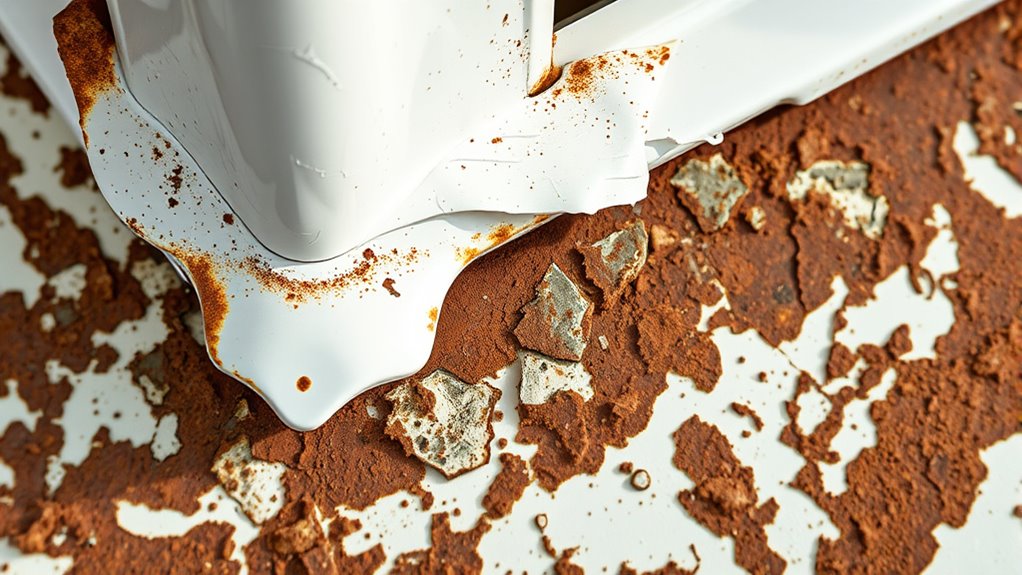

Hidden rust behind trim often starts when water seeps in through cracks or deteriorated sealant, creating a moist environment that promotes corrosion out of sight. You may notice paint peeling or discolored areas, but rust can develop unnoticed beneath trim, weakening your vehicle’s structure over time. Ignoring these signs can lead to costly repairs and safety issues. Want to uncover how to identify and prevent hidden rust before it worsens? There’s more to learn to protect your car effectively.
Key Takeaways
- Rust can develop behind trim if water seeps through cracks or deteriorated sealant unnoticed.
- Visible paint peeling or discoloration around trim indicates potential hidden rust formation.
- Removing trim periodically allows inspection for rust spots concealed underneath.
- Water intrusion behind trim accelerates corrosion, weakening the vehicle’s structural integrity.
- Promptly addressing small paint chips or gaps prevents water penetration and hidden rust development.
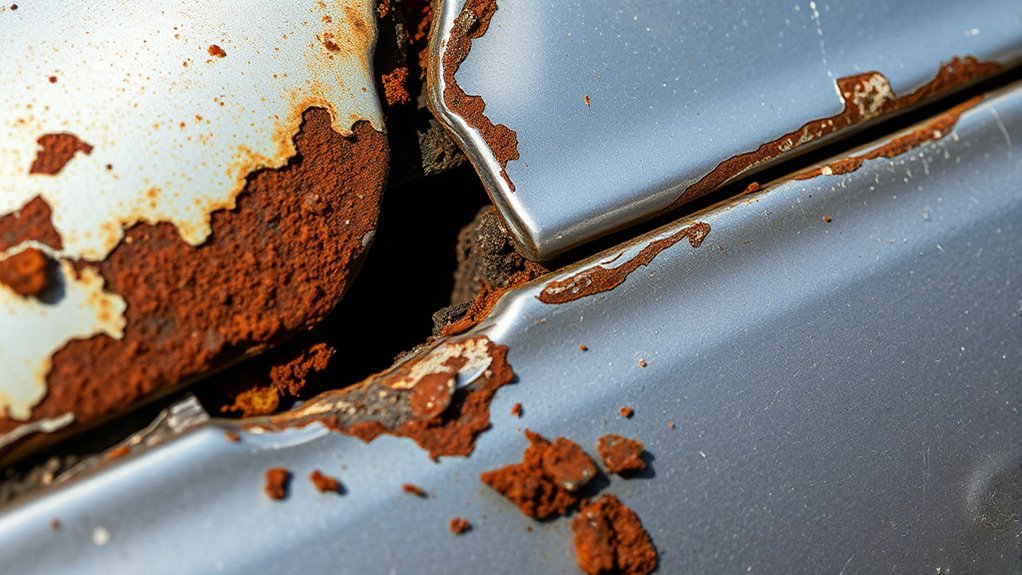
Have you ever noticed a small gap or discoloration around your car’s trim and wondered what’s hidden beneath? That tiny space might seem insignificant, but it can be a warning sign of bigger problems lurking underneath the surface. When you see paint peeling or chipping near the trim, it’s often an indicator that water intrusion has started. Water can seep into these cracks and gaps, especially if the sealant has deteriorated over time. Once water gets behind the trim, it creates a perfect environment for rust to form—sometimes hidden from view until it’s too late. Rust behind the trim can compromise your vehicle’s structural integrity, leading to costly repairs if left unchecked.
Small gaps and paint peeling signal hidden rust and water damage beneath your car’s trim.
The issue begins with the paint peeling away, exposing bare metal that’s vulnerable to corrosion. This peeling isn’t just a cosmetic concern; it’s an early warning sign that moisture is getting past the paint layer. As water continues to penetrate, it finds its way into the hidden spaces behind the trim, where it can’t dry out easily. Over time, this persistent moisture accelerates rust formation, often in spots you can’t see without removing the trim. The more water that intrudes, the worse the rust problem becomes, weakening the metal and potentially causing holes or structural damage. If you ignore these signs, the rust can spread out of sight, leading to more extensive and expensive repairs.
To prevent this, it’s essential to regularly inspect the areas around your trim for signs of paint peeling or discoloration. Addressing small issues early can save you a lot of trouble down the line. If you notice paint peeling or suspect water intrusion, it’s wise to remove the trim carefully and check for rust underneath. Treating rust spots with rust converter or primer can halt further corrosion, but the best approach is to prevent water from entering in the first place. Applying new sealant or weatherstripping around the trim can create a reliable barrier against water intrusion. Remember, the key is to stay vigilant—what looks like a minor cosmetic flaw now might turn into a serious structural problem later.
Additionally, understanding cosmic connections between external factors and vehicle wear can help you stay proactive in maintenance. Ultimately, understanding the signs of water intrusion and paint peeling helps you catch hidden rust early. Regular maintenance and inspections are your best tools in preventing rust from spreading behind the trim, saving you money and preserving your vehicle’s value. Don’t ignore those small gaps or discolorations; they’re telling you something is wrong beneath the surface. Acting promptly can keep your car looking good and functioning safely for years to come.
Frequently Asked Questions
How Can I Prevent Rust Behind Vehicle Trim?
To prevent rust behind vehicle trim, you should regularly inspect and clean the area to remove dirt and moisture. Apply rust prevention treatments like sealants or rust inhibitors to the trim and surrounding spots. Keep up with trim maintenance by touching up paint chips and sealing gaps. Ensuring proper drainage and parking in covered areas also helps. Staying proactive with these steps helps protect your vehicle from hidden rust damage.
What Tools Are Best for Removing Hidden Rust?
You should use a wire brush or a rotary tool with a wire wheel to remove loose rust and paint preparation. For stubborn rust, apply rust converters to chemically neutralize it. Sandpaper or a sanding block also work well for smoothing the surface before priming and painting. These tools help make certain all rust is removed or converted, providing a solid base for protection and preventing future corrosion behind vehicle trim.
Does Rust Damage Affect Vehicle Safety?
Rust damage can considerably impact your vehicle’s safety; studies show it accounts for nearly 20% of vehicle failures. Rust weakens metal, compromising structural integrity and increasing accident risks. To prevent this, prioritize rust prevention and corrosion control, especially in hidden areas like behind trim. Regular inspections and prompt treatment help maintain safety and prolong your vehicle’s lifespan, ensuring you’re protected on every drive.
How Long Does Rust Removal Typically Take?
Rust removal usually takes a few hours to a day, depending on the rust’s severity. You’ll start by applying a rust converter to neutralize rust and prevent it from spreading. Then, you’ll need to sand the area and do a paint touch-up to restore the finish. If the rust is extensive, the process might take longer, but for small spots, a quick fix is often possible within a day.
Can Rust Behind Trim Be Fixed at Home?
Yes, you can fix rust behind trim at home. Start by removing the trim carefully and using a rust converter to treat the rust. Once the rust converter has done its job, sand the area smooth and apply a paint touch-up to prevent further corrosion. Make sure to wear protective gear and work in a well-ventilated space. With patience, you can effectively repair rust spots yourself.
Conclusion
Just like rust creeping unseen beneath a painted surface, hidden damage can quietly eat away at your car’s integrity. Don’t wait until it’s too late—inspect behind trim regularly, catching rust early before it spreads like wildfire. Think of it as tending a garden; a small weed can turn into a jungle if ignored. Stay vigilant, and you’ll keep your vehicle solid and strong, preventing rust from taking hold and turning your ride into a rusty relic.