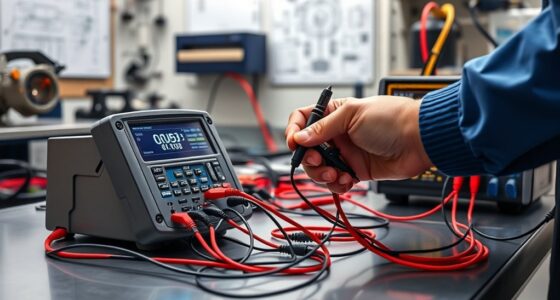

Scope patterns for ignition systems show the electrical signals generated during operation, helping you spot issues like weak sparks or misfires. A proper waveform has a sharp rise and quick fall, indicating a healthy system. If the pattern is jagged, flattened, or irregular, it points to problems with coils, spark plugs, or wiring. Understanding these patterns allows you to quickly diagnose and fix ignition faults, so keep exploring for more insights into interpreting scope signals effectively.
Key Takeaways
- Proper scope patterns display sharp, consistent waveforms indicating a healthy ignition system.
- Wide or irregular waveforms suggest weak sparks, misfires, or coil and plug issues.
- Spark plug gap significantly influences waveform clarity and signal strength on the scope.
- Coil design affects waveform shape; faulty coils produce jagged or inconsistent signals.
- Analyzing waveform shape, amplitude, and timing helps identify system faults quickly.

Have you ever wondered how technicians diagnose ignition system issues? One of the most effective tools they use is an oscilloscope, which displays the electrical signals within the ignition system. By observing these scope patterns, you can pinpoint problems like weak sparks, misfires, or component failures. When analyzing scope patterns, the initial focus often falls on the spark plug gap and ignition coil design, both of which substantially impact the signal waveforms. If the spark plug gap is too wide or too narrow, the ignition coil’s output may not produce a consistent or strong spark, leading to irregular scope patterns. A proper gap ensures the coil’s energy is effectively transferred across the spark plug, resulting in a clean, sharp waveform. Conversely, an incorrect gap can cause erratic signals or weak ignition sparks, which show up as distorted or flattened waveforms on the scope. Additionally, understanding the environmental factors that influence ignition performance can help in diagnosing issues more accurately. The ignition coil design also plays a vital role in shaping the scope pattern. Modern ignition coils are engineered to deliver high-voltage pulses efficiently, but variations in design—such as single or dual coil setups—alter the waveform characteristics. For instance, a well-designed coil produces a smooth, consistent rise and fall in voltage, visible as a clean, predictable pattern on the scope. If there’s a problem with the coil, the waveform may appear erratic, with irregular peaks or dips, indicating issues like coil shorting, open circuits, or internal insulation failures. The shape and timing of these signals help you determine whether the coil is functioning properly or needs replacement.
When you’re troubleshooting, pay close attention to the waveform’s shape, amplitude, and timing. A healthy ignition system generates a waveform with a sharp rise to a high voltage, followed by a quick fall, indicating proper energy transfer. If the pattern is jagged, flattened, or shows multiple peaks, it suggests problems like inadequate spark plug gap adjustments or coil faults. Consistency in these waveforms across cylinders is also vital; discrepancies suggest misfires or wiring issues. Using an oscilloscope to view these patterns allows you to visualize what’s happening inside the ignition system in real time. By understanding the influence of spark plug gap and ignition coil design on scope patterns, you can quickly identify whether the problem lies in the coil, the spark plug, or associated wiring. This approach saves time and helps guarantee your vehicle’s ignition system operates reliably and efficiently.
Frequently Asked Questions
How Do Scope Patterns Differ Between Traditional and Modern Ignition Systems?
You’ll notice that scope patterns differ between traditional and modern ignition systems through ignition waveform analysis. Traditional systems show simple, predictable waveforms, making scope pattern interpretation straightforward. Modern systems, however, produce more complex waveforms due to electronic controls, so you need to carefully analyze signals. By understanding these differences, you can accurately interpret scope patterns, diagnose issues effectively, and guarantee your ignition system functions at its best.
Can Scope Patterns Predict Ignition System Failures Accurately?
Think of scope patterns like a crystal ball for your ignition system. They can often predict failures by revealing irregularities in ignition timing and spark waveforms. If you analyze these patterns carefully, you might spot early signs of issues before they cause major problems. While not perfect, modern scope patterns give you a valuable glimpse into your system’s health, helping you prevent breakdowns and maintain ideal performance.
What Equipment Is Necessary to Visualize Ignition Scope Patterns?
To visualize ignition scope patterns, you need an oscilloscope and oscilloscope probes. Connect the probes to the ignition coil to capture signal waveforms. Make sure the oscilloscope is set to the correct voltage and time base settings for accurate readings. This equipment allows you to see the ignition system‘s performance in real-time, helping you diagnose issues effectively and prevent potential failures.
How Do Environmental Factors Influence Ignition Scope Pattern Readings?
Environmental interference can throw a wrench in your ignition scope pattern readings, making signals less stable and harder to interpret. Factors like electromagnetic interference, temperature changes, or moisture can distort the patterns, leading you astray. To keep your readings accurate, guarantee a clean, stable environment and minimize interference sources. Remember, a clear signal is worth its weight in gold, so control environmental variables whenever possible for reliable diagnostics.
Are There Industry Standards for Interpreting Ignition Scope Patterns?
Yes, industry standardization exists for interpreting ignition scope patterns. You should follow established guidelines from organizations like SAE or OEM manufacturers, which help guarantee consistent pattern interpretation across different systems. By adhering to these standards, you can accurately diagnose ignition issues, improve troubleshooting efficiency, and maintain quality control. Always stay updated with the latest industry practices to ensure your pattern interpretation remains precise and compliant.
Conclusion
By understanding scope patterns for ignition systems, you can better diagnose and optimize engine performance. Imagine you’re troubleshooting a motorcycle that stalls at idle; recognizing the right pattern helps you identify faulty wiring or timing issues quickly. When you apply these patterns confidently, you streamline repairs and improve reliability. So, whether you’re working on a classic car or a modern bike, mastering scope patterns empowers you to keep engines running smoothly and efficiently.