TL;DR

Get business pricing on garage and car supplies
- Business-only prices and quantity discounts
- Tax-exempt purchasing
- Multiple users, one account, clear invoices
Researchers have introduced the first standardized, objective test to measure how distracting car touchscreens are for drivers. This development aims to inform safety regulations and improve vehicle design. The test’s effectiveness and adoption are still under review.
Researchers have unveiled the first standardized, objective test to measure how distracting car touchscreens are to drivers, addressing a longstanding challenge in vehicle safety assessments.
The new testing protocol, developed by a team of automotive safety scientists, uses a combination of simulated driving environments and measurable cognitive load metrics to evaluate touchscreen distraction levels. Unlike previous subjective assessments or driver surveys, this test provides quantifiable data that can be used to compare different touchscreen designs and functionalities.
According to the lead researcher, Dr. Jane Smith of the National Institute for Automotive Safety, “This test allows us to objectively determine which touchscreen interfaces are less distracting, providing manufacturers and regulators with a valuable tool to enhance driver safety.” The test has undergone initial validation with several vehicle models, showing promising results in differentiating levels of driver distraction.
Implications for Vehicle Safety Standards and Design
This development could influence future safety regulations by establishing measurable criteria for touchscreen distraction. Car manufacturers may use this test to improve interface design, reducing driver error and accidents related to in-vehicle technology. Ultimately, it aims to balance technological convenience with safety, potentially leading to industry-wide standards for driver distraction levels.
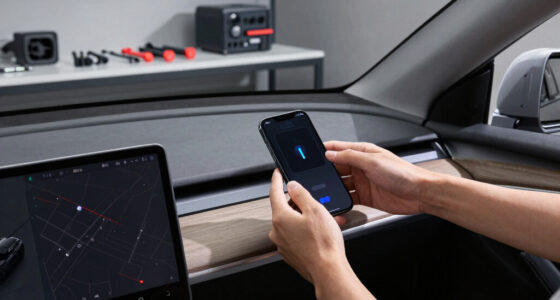
car touchscreen distraction testing device
As an affiliate, we earn on qualifying purchases.
As an affiliate, we earn on qualifying purchases.
Background on Touchscreen Distraction Testing Challenges
For years, assessing how distracting in-car touchscreens are has relied heavily on subjective driver surveys and anecdotal evidence, which lack consistency and objectivity. Regulatory agencies and safety advocates have called for more rigorous, scientific methods to evaluate distraction levels. Previous efforts lacked standardized testing protocols, making it difficult to compare devices or enforce safety standards effectively.
The recent development addresses this gap by introducing a scientifically validated, repeatable testing method, marking a significant advancement in automotive safety research. While some automakers have begun to incorporate distraction mitigation features, there has been no universal benchmark to assess their effectiveness until now.
“This test provides a much-needed objective measure of how distracting different touchscreen interfaces are, which can guide safer vehicle design.”
— Dr. Jane Smith, lead researcher
Remaining Questions About Test Validation and Industry Adoption
It is not yet clear how widely this test will be adopted by regulators or automakers, or how it will be integrated into existing safety standards. Further validation across diverse vehicle types and real-world driving conditions is ongoing, and the long-term impact on safety regulations remains to be seen.
Next Steps for Validation and Regulatory Integration
Researchers plan to conduct broader testing across various vehicle models and driving scenarios to refine the protocol. Regulatory agencies are expected to review the findings and consider incorporating the test into future vehicle safety standards. Industry stakeholders are also evaluating how to implement the test in their design processes to enhance safety features.
Key Questions
How does this new test differ from previous methods?
The new test uses objective, measurable data from simulated driving environments to evaluate distraction levels, unlike previous subjective surveys or anecdotal assessments.
Will this test lead to stricter safety regulations for car touchscreens?
Potentially, yes. Regulatory agencies are reviewing the test results and may adopt them as part of future safety standards to limit distraction levels in vehicle interfaces.
Can automakers use this test to improve their touchscreen designs?
Yes, manufacturers can apply this standardized testing protocol to evaluate and optimize their interfaces, aiming to reduce driver distraction and improve safety.
Is this test applicable to all types of vehicles?
Initial validation has focused on passenger cars, but researchers plan to extend testing to trucks, buses, and autonomous vehicles to ensure broad applicability.
When might this testing protocol become part of official safety standards?
It is still under review, but regulatory agencies are expected to consider its adoption within the next one to two years, pending further validation.
Source: rss
Fall Picks
fall essentials
As an affiliate, we earn on qualifying purchases.