
If your engine mount is failing, you’ll notice increased vibrations, especially at idle or during acceleration, along with unusual noises like knocking or banging. You might see the engine shift or sit at odd angles, and there could be visible cracks, tears, or leaks on the mounts. Ignoring these signs can lead to more serious damage and costly repairs. Stay tuned to discover more about how to identify and address these issues early.
Key Takeaways
- Increased vibrations felt through the steering wheel, seat, or vehicle during idling or acceleration.
- Engine shifts or moves unexpectedly, causing clunking or misalignment noises.
- Visible damage such as cracks, tears, or oil leaks on engine mounts.
- Banging, knocking, or clunking sounds during acceleration or deceleration.
- Ignoring these signs can lead to further engine and transmission damage, increasing repair costs.
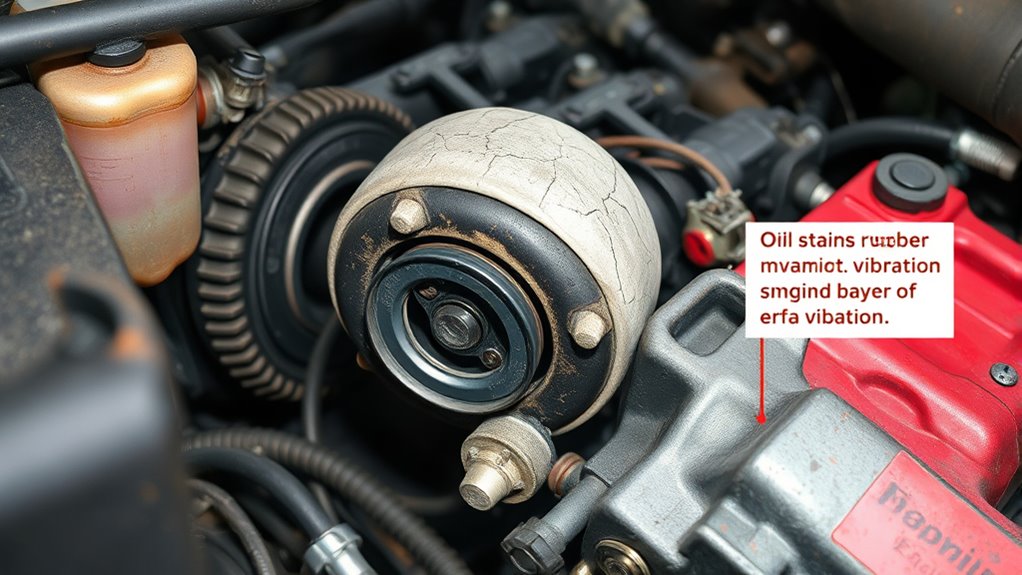
Your engine mount plays a essential role in stabilizing your vehicle’s engine, and when it begins to fail, you’ll notice several telling signs. One of the most common indicators is vibration sensations that become more pronounced during idling or acceleration. You might feel a noticeable shake or rumbling through the steering wheel, your seat, or the entire vehicle. These vibrations aren’t normal and suggest that the engine isn’t being held firmly in place. As the mount deteriorates further, these vibrations often intensify, making driving uncomfortable and increasing the risk of additional mechanical issues.
Another key sign is engine misalignment. When an engine mount weakens or breaks, it can cause the engine to shift slightly from its proper position. This misalignment affects how the engine components fit and work together, leading to abnormal movements that you can sometimes feel as clunks or shifts when shifting gears or accelerating. Engine misalignment also puts extra stress on other parts like hoses, belts, and the transmission, potentially causing further damage if not addressed promptly. If you notice your engine seems to be sitting at odd angles or if you hear unusual noises during operation, it’s a strong sign that your mounts might be failing.
You may also observe visible signs of wear or damage on the engine mounts themselves. Cracks, tears, or oil leaks in the rubber or other mount materials indicate deterioration. When these mounts are compromised, they lose their ability to absorb engine vibrations and shocks, resulting in a rougher ride and increased noise. Over time, the mounts may even come loose or break completely, leading to more severe issues such as engine movement that could impact the drivetrain or exhaust system.
Engine mount failure can also manifest as increased noise levels, especially during acceleration or deceleration. You might hear banging, knocking, or clunking sounds that weren’t there before. These noises occur because the engine is shifting more than it should, hitting against other components or the frame. If you notice these sounds along with vibration sensations and signs of misalignment, it’s essential to get your vehicle checked promptly.
Ignoring these signs can cause further damage to your vehicle’s engine and transmission, leading to costly repairs down the line. Regular inspections and listening to your vehicle’s signals can help you catch engine mount issues early. When in doubt, a professional mechanic can diagnose the problem accurately and recommend the right course of action to restore your vehicle’s stability and safety.
Frequently Asked Questions
Can Engine Mount Failure Cause Engine Misalignment?
Yes, engine mount failure can cause engine misalignment. When mounts weaken or break, they allow engine vibration and displacement to shift, leading to misalignment. You might notice increased vibrations, unusual noises, or uneven engine positioning. This misalignment can impact your vehicle’s performance and cause further damage if not addressed. Regularly inspecting and replacing faulty engine mounts guarantees proper alignment, reducing vibration and maintaining smooth engine operation.
How Long Does It Typically Take to Replace an Engine Mount?
Replacing an engine mount typically takes about 2 to 4 hours, depending on your vehicle’s make and model. The engine mount lifespan varies, but most last between 60,000 to 100,000 miles. The replacement timeline depends on factors like wear and tear, driving conditions, and maintenance history. It’s best to have a mechanic inspect it regularly so you can plan for replacement before it causes further engine issues.
Are There Specific Driving Habits That Increase Engine Mount Wear?
Your driving style and road conditions directly impact engine mount wear. Aggressive driving, like hard acceleration and sudden stops, puts extra stress on mounts, while rough or uneven roads cause additional vibration and strain. If you frequently accelerate rapidly or drive on poor surfaces, you increase the risk of early failure. To prolong their life, drive smoothly and avoid harsh maneuvers, especially on bumpy roads.
What Are the Costs Associated With Engine Mount Replacement?
The replacement expense for an engine mount varies, but you can expect a cost estimate between $200 and $600, depending on your vehicle make and model. Labor costs often account for a significant portion of the total. If you notice engine vibrations or unusual noises, it’s best to get it checked promptly, as delaying repairs can increase overall costs. Budget accordingly for the necessary repair and guarantee your vehicle runs smoothly.
Can Engine Mount Failure Lead to Transmission Issues?
Engine mount failure can be like a shaky foundation for a house, affecting your vehicle’s stability. When mounts fail, you’ll notice engine vibrations that can transfer to the transmission, potentially causing issues over time. These vibrations may lead to misalignment or stress on transmission components, risking damage. So, yes, a failing engine mount can indirectly cause transmission problems, making it essential to address mount issues promptly to keep your vehicle running smoothly.
Conclusion
If you notice clunks, excessive vibrations, or engine movement, don’t ignore these signs—they’re your ship’s warning bells. Catching engine mount failure early can save you from a breakdown closer than a bolt in your pocket. Think of it as spotting a crack in the hull before a storm hits; it’s better to fix it now than be stranded in the middle of the road, wishing you had a time machine to rewind and address the issue.