TL;DR

Get business pricing on garage and car supplies
- Business-only prices and quantity discounts
- Tax-exempt purchasing
- Multiple users, one account, clear invoices
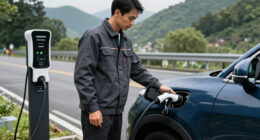
The world’s EV capital demonstrates advanced fast charging infrastructure that can inform global efforts. This trend is driven by high EV adoption and strategic investments, though some details remain unconfirmed.
The world’s EV capital has significantly expanded its fast charging network, establishing a model that could accelerate global EV adoption. This development is confirmed by recent infrastructure reports and site visits, highlighting the city’s strategic investments and technological advancements in rapid charging. The growth of this network underscores the importance of accessible, high-speed charging for mainstream EV adoption, making it a key case study for other regions aiming to boost electric vehicle use.
Over the past two years, the EV capital has deployed hundreds of fast chargers, with some stations offering charging speeds exceeding 250 kW. This rapid expansion aligns with a surge in local EV sales, which now constitute over 60% of new vehicle registrations, according to local transportation authorities. Industry experts note that the city’s focus on high-capacity chargers and widespread station placement has reduced charging wait times and increased consumer confidence in EVs.
Officials attribute their success to targeted investments, public-private partnerships, and a regulatory environment that favors fast charging infrastructure deployment. Notably, several stations are equipped with ultra-fast chargers that can add up to 200 miles of range in less than 15 minutes, a critical factor for long-distance travel and urban convenience. Some of these stations are also integrated with renewable energy sources, reducing the carbon footprint of EV charging.
While the infrastructure rollout is well-documented, some details about future expansion plans and technological upgrades remain unconfirmed. Industry insiders suggest that the city is exploring next-generation charging tech, including wireless fast charging and battery swapping stations, but official statements are pending. The city’s approach is often cited as a benchmark for other regions considering similar investments.
Lessons from the EV Capital’s Charging Strategy
This case demonstrates the critical role of high-speed charging infrastructure in encouraging EV adoption. The city’s model shows that strategic placement and investment in ultra-fast chargers can significantly reduce range anxiety and charging times, addressing key barriers to EV use. For policymakers and industry players worldwide, these insights could inform infrastructure planning, investment priorities, and technological innovation to accelerate electric mobility.
Furthermore, the city’s emphasis on integrating renewable energy into charging stations highlights the potential for sustainable EV infrastructure, aligning with broader climate goals. As other regions seek to replicate this success, understanding the operational and economic factors behind the EV capital’s network becomes vital for scaling fast charging solutions globally.
As an affiliate, we earn on qualifying purchases.
Rapid Growth of EV Adoption and Infrastructure
The interest in the EV capital’s fast charging network is driven by a broader trend of increasing EV adoption worldwide, supported by government incentives, stricter emissions regulations, and falling battery costs. The city’s high EV market share, now exceeding 60%, is among the highest globally, prompting a need for extensive charging infrastructure to support this growth.
Historically, the challenge for many regions has been deploying enough fast chargers to meet demand without creating bottlenecks or excessive costs. The EV capital’s experience suggests that targeted investments, combined with technological innovation and policy support, can overcome these hurdles. Industry analysts note that the city’s approach is often cited as a best practice example, though replicating it elsewhere requires adaptation to local conditions.
While the infrastructure expansion appears successful, some experts caution that technological and economic uncertainties remain, especially regarding the future evolution of charging tech and grid integration. The ongoing development of ultra-fast chargers and potential grid upgrades are still in progress, with some details yet to be confirmed by official sources.
Unconfirmed Details on Future Tech and Expansion
Many specifics about upcoming technological upgrades, such as wireless charging or battery swapping stations, remain unconfirmed. Additionally, the city’s long-term expansion plans and funding models are still under development, with official announcements pending. Industry sources suggest that further innovations could enhance charging speeds and grid integration, but these are not yet confirmed or operational.
Next Steps in Scaling and Innovating Charging Infrastructure
The city is expected to announce detailed expansion plans and potential technological upgrades within the next 6 to 12 months. Industry analysts anticipate further investments in ultra-fast chargers, grid upgrades, and integration of renewable energy sources. Additionally, other regions are closely watching this model to adapt its best practices, potentially accelerating global EV infrastructure deployment.
Key Questions
How does the EV capital’s charging network compare to others worldwide?
The EV capital has one of the densest networks of ultra-fast chargers, with speeds exceeding 250 kW, enabling rapid top-ups and long-distance travel. While some cities have more chargers, the combination of speed, coverage, and integration with renewable energy makes it a leading example.
What are the main challenges in expanding fast charging infrastructure?
Challenges include high capital costs, grid capacity limitations, technological compatibility, and ensuring equitable access across urban and rural areas. The EV capital’s experience suggests that targeted investments and public-private partnerships are key to overcoming these hurdles.
Will the focus on ultra-fast chargers be sustainable long-term?
While ultra-fast chargers currently meet high demand, ongoing technological developments may lead to new solutions such as wireless charging or battery swapping, which could complement or replace existing fast chargers. The sustainability of ultra-fast charging depends on grid capacity, cost, and technological evolution.
Are there plans to incorporate renewable energy into all charging stations?
Yes, the city is exploring ways to power its charging stations with renewable energy, including solar and wind, to reduce carbon emissions and promote sustainability. Some stations already feature integrated renewable sources, with plans for broader adoption.
Source: rss
Halloween Picks
halloween
As an affiliate, we earn on qualifying purchases.